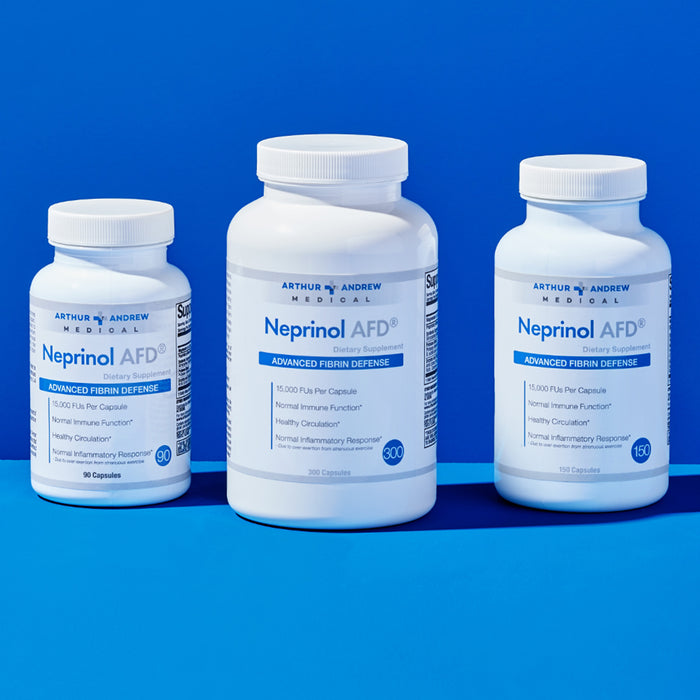

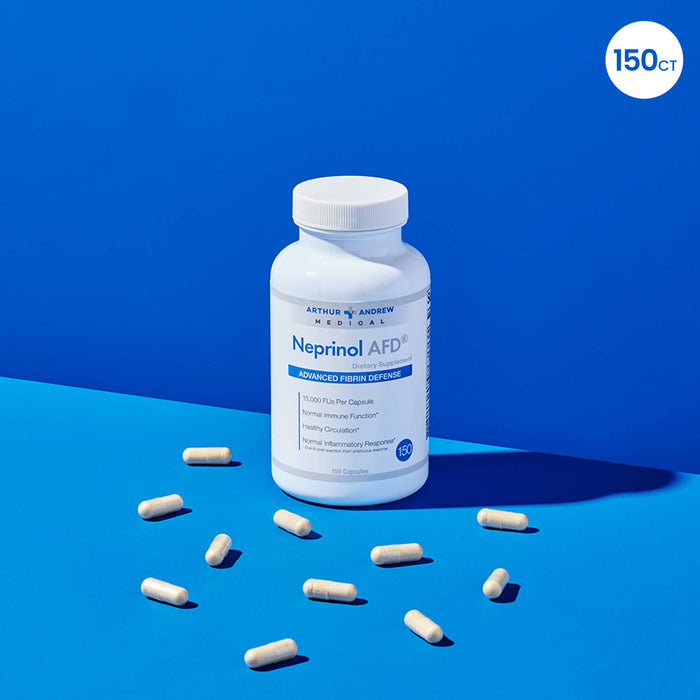
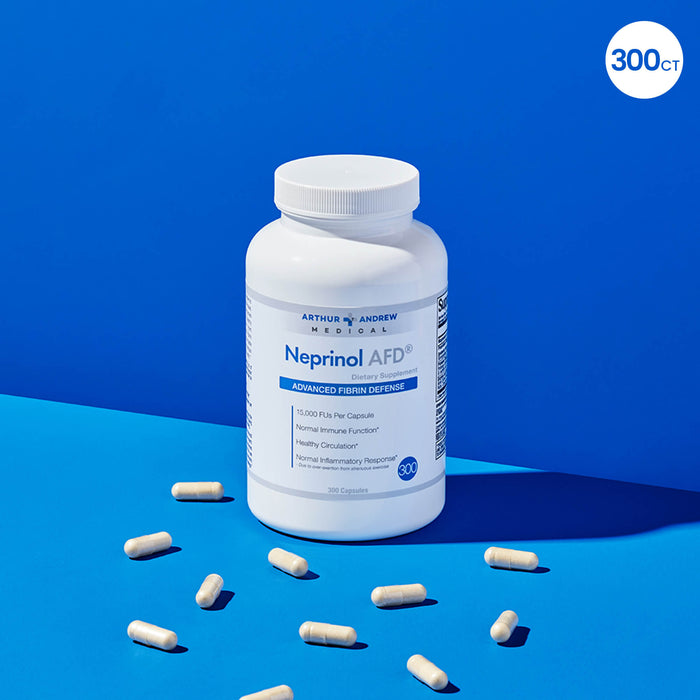


The End of Heart Disease & Arthritis
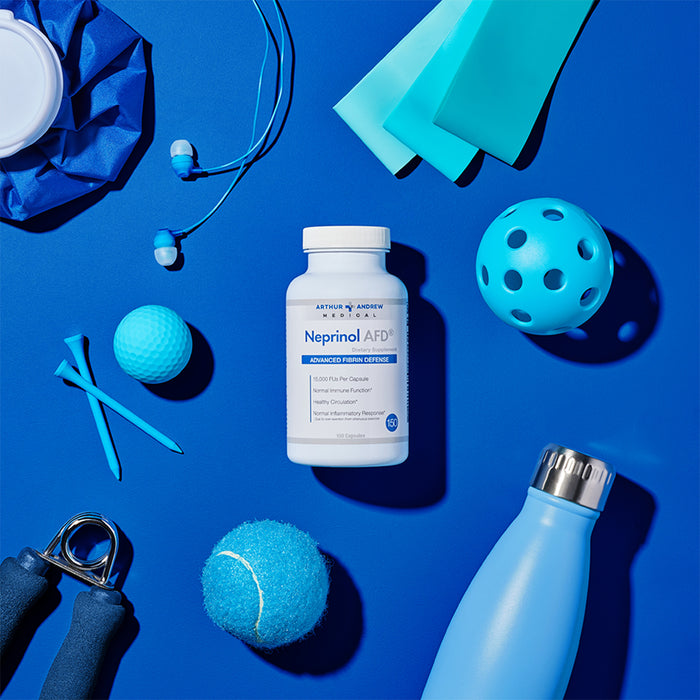
Discovery Health Channel host Laurent Bannock, D.Sc., has completed a multi-patient study at the Santa Fe Cente for Nutritional Medicine in Santa Fe, New Mexico, to examine the ability of Neprinol to help the body maintain healthy fibrin activity and inflammation levels.
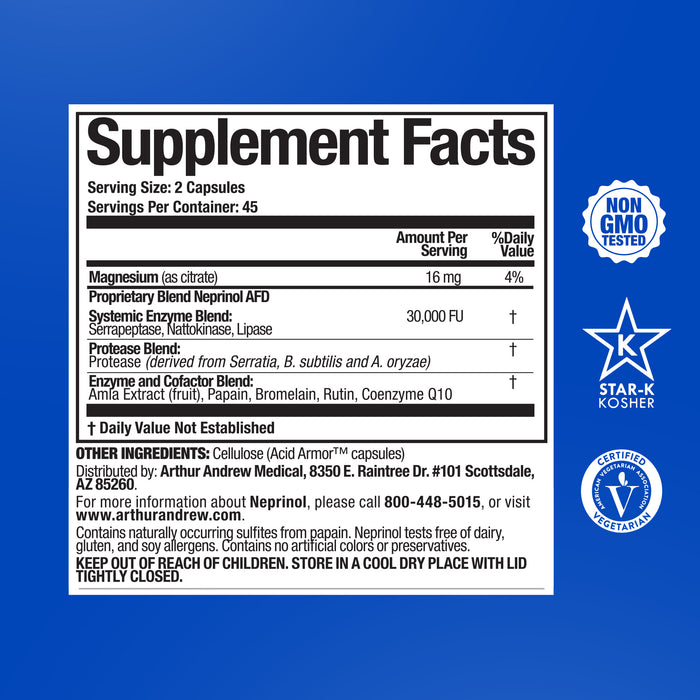
Dr. Bannock has published detailed clinical reports that provide evidence of Neprinol’s ability to help aging patients maintain healthy fibrin and inflammation processes in the body. This is critical since fibrosis, which is the excess sclerotic production of fibrin, causes high inflammation, a significant cause of premature aging and a clear-cut dangerous health signal. His study results, thus far, deal particularly with patients who complained primarily of osteoarthritis symptoms, a known inflammatory condition, as well as the even more inflammatory rheumatoid arthritis and health challenges involving cholesterol and insulin response. Neprinol combines key enzymes and synergists, such as nattokinase, serrapeptase, papain, bromelain, rutin and lipase (with coenzyme Q10).
Systemic Enzyme Deficiency
There are thousands of catalytic processes taking place between tissues and fluids in living plants and animals each day. These processes can occur only as a result of enzymatic reactions. Ancient men and women received enzymes from their diet via vegetables, fruits and other raw foods, nature’s richest sources of enzymes. Unfortunately, however, even moderate temperatures at which most foods are cooked destroy enzymes. Although enzymes are found most active in raw foods, the majority of food consumed today is both processed and cooked at extremely high temperatures, reducing dietary enzyme levels even further. Enzyme deficiencies can lead to common health problems—such as circulatory disorders, cancer, arthritis and kidney disease. Young adults have far greater enzyme activity than older ones whose ability to manufacture enzymes diminishes with age. The aging body’s diminished enzyme activity is part of the reason that people age prematurely. Bannock’s work and many other studies that have been covered extensively in medical journals support the use of systemic oral enzymes as a healthy approach to keeping the heart, joints, brain and other organs functioning efficiently for as long as possible.
The “Dark Side” of Tissue Repair
When scientists examine the most age related illnesses including heart disease, stroke, cancer, diabetes, kidney disorders and arthritis—similar underlying causes can be found: All of these conditions are characterized by insidious sclerosis and fibrosis that is caused by the oversecretion of growth factors. Sclerosis is defined as a hardening of a bodily tissue (such as the coronary arteries, i.e., arteriosclerosis) or an increase of connective tissue at the expense of more active tissue. Meanwhile, fibrosis is very similar to sclerosis, involving development of excess fibrous tissue in an organ (such as kidney fibrosis). Fibrosis can be detected in a number of ways, but is most noticeable with the pain associated with high levels of inflammation. Health experts have different ways of measuring the progression of these unfavorable bodily processes. For example, Dr. Bannock uses digital video blood microscopy which shows doctors whether blood has excess fibrin, oxidative stress and excessive white blood cell counts. Such indicators almost always indicate rheumatoid and osteoarthritis, as well as other negative health conditions. C-reactive protein (CRP) measurements were taken to determine bodily inflammation levels of the patients in the study. Increased CRP levels are often an indication of unhealthy fibrin activity, causing the blood to abnormally clot, increasing risk of heart attacks and strokes. Doctors have also associated high CRP with increased risk for heart disease. Another test used in the study was measuring erythrocyte sedimentation rate (ESR). In this test a blood sample is taken and put in a tube with chemicals which prevent the blood from clotting. The tube is left to stand upright. The red blood cells (erythrocytes) gradually fall to the bottom of the tube as a “sediment.” The clear liquid plasma is left at the top. The ESR measures the rate at which the red blood cells separate from the plasma and fall to the bottom of a test tube. The rate is measured in millimeters per hour (mm/hr). If certain proteins cover red cells, these will stick to each other and cause the red cells to fall more quickly. A high ESR indicates inflammation somewhere in the body. With age also comes fibrosis. Wrinkling and elastosis (loss of skin elasticity) are all outer signs of fibrosis. What is happening on the outside of the body is happening on the inside, too—to arteries, kidneys, lungs and other tissues and organs. Both sclerosis and fibrosis proceed with almost uncanny determination by the time a person reaches 40 and eventually affect virtually every tissue and organ in the body.
Clinical Studies
The following case studies were taken from a larger six-month independent clinical study on Neprinol carried out by Dr. Bannock. CRP measurements, digital video blood microscopy, standard blood workups, as well as patients’ subjective assessments were taken to demonstrate the efficacy of Neprinol on the patients.
Understanding Live Blood Video Microscopy
Video microscopy of live and dried layered blood analysis is a unique technique used to formulate an appropriate course of natural health building and lifestyle principles to optimize health, prevent disease, and to monitor individual effectiveness. This technique uses live, not preserved blood, with higher magnification than conventional methods. The live blood images below and throughout the rest of this report reflect several types of live blood video microscopy. The first three images in each four-image set utilize phase contrast and dark field microscopy. In these, the clinician searches for fibrin spiculae, which should not appear in live blood at all. “It
indicates that the balance between hemostasis and fibrinolysis is too much in favor of clotting,” says Dr. Bannock. Additionally, cholesterol and mycoplasma organisms can also be viewed in the blood. The last image in each four-image set is Dried Layered Blood Analysis to examine the coagulation cascade. This application of viewing dried suspended blood samples offers the qualified analyst and client valuable clues to potential degenerative patterns. The use of digital microscopy and live blood analysis has been criticized by some of in medical community. The reason for this is two-fold. The interpretation of dark field images as well as the handling of the specimen must be done with great care to get accurate results. The use of blood analysis has little or no use when prescribing pharmaceutical drugs for the alleviation of arthritis and related conditions. This is mainly the reason it has not been widely accepted in the medical community. It is however a useful tool in clinical nutrition. Blood analysis helps pinpoint deficiencies and abnormalities in the blood. It is very effective for a nutritionist involved in prescribing the nutritional regiment to restore normal values that may otherwise seem normal.
_____________________________________________________________________________________________
Neprinol Case Study #1
Study Subject: 45-year-old male construction worker recently diagnosed with osteoarthritis.
Initial Visit
Subjective: Chronic pain and inflammation of the wrist and elbow joints (both arms). Uses over-the-counter ibuprofen for relief, regularly.
Objective: Lab tests showed very high C-reactive protein, high ESR, high platelets and high globulin values. Digital video blood microscopy showed significant protein polymerization (oxidative stress that causes high ESR levels), raised platelets, raised poikilocytes (variably shaped cells, which are seen in iron deficiency anemia), raised fibrin and raised white blood cells (WBCs, an indication of an unhealthy immune system).
Treatment: Three Neprinol capsules, twice a day, between meals. Advised to discontinue ibuprofen usage. No other medications or supplements were recommended (for the purposes of the study).
_____________________________________________________________________________________________
Two Month Follow-Up Visit
Subjective: Still had some pain and inflammation of wrists and elbows, but reports symptoms to be markedly improved. Objective: Lab tests showed slightly raised C-reactive protein, high ESR, normal platelets, slightly raised globulin values. Digital video blood microscopy showed moderate protein polymerization (oxidative stress), slightly raised platelets, slightly raised poikilocytes, normal fibrin and slightly raised WBCs.
Treatment: Three Neprinol capsules, twice a day, between meals. Has discontinued ibuprofen usage.
_____________________________________________________________________________________________
Four Month Follow-Up Visit
Subjective: Completely pain and inflammation free. No longer uses ibuprofen at all!
Objective: Lab tests showed normal C-reactive protein, slightly high ESR, normal platelets and normal globulin values. Digital video blood microscopy showed slight protein polymerization (oxidative stress), normal platelets, very few poikilocytes, no fibrin and normal white blood cells.
Treatment: Two Neprinol capsules twice daily, between meals.
________________________________________________________________________________________________
Six Month Follow-Up Visit
Subjective: Still completely pain and inflammation free.
Objective: Lab tests are normal. Digital video blood microscopy is normal.
Treatment: One Neprinol capsule twice daily, between meals.
____________________________________________________________________________________________
Lab Test Values (Blood) for Neprinol Osteoarthritis Case Study
| Lab Test | Initial Visit | 2 Month Visit | 4 Month Visit | 6 Month Visit |
| C-reactive protein
<1.0 = Low 1.0 – 3.0 = Average 3.1 – 10.0 = High >10 = Persist. Inflammation |
13.7 mg/L | 11.4 mg/L | 7.1 mg/L | 2.8 mg/L |
| ESR
Normal Values for Males: 0-15 mm/hour |
17.3 mm/hour | 16.7 mm/hour | 15.2 mm/hour | 9.4 mm/hour |
| Platelets
Normal Values: 155 – 385 x 103/mm3 |
397 x 103/mm3 |
353 x 103/mm3 |
316 x 103/mm3 |
317 x 103/mm3 |
| Globulin
Normal Values: 2.0 – 3.9 g/dL |
4.2 g/dL | 3.94 g/dL | 3.16 g/dL | 2.77 g/dL |
_____________________________________________________________________________________________
Neprinol Case Study #2
Initial Visit
Subjective: Pain, inflammation and discomfort, and partial loss of all joint functions. has been using NSAIDs (non-steroidal anti-inflammatory drugs, such as aspirin or ibuprofen) since diagnosis five years ago. The NSAIDs only provide partial relief of symptoms. Has also been taking fish oils and glucosamine supplements for one year with some benefit to all symptoms
Objective: Lab tests showed high uric acid, high ESR, raised C-reactive protein and low albumin values. Digital video blood microscopy showed significant protein polymerization and fibrin.
Treatment: Five Neprinol capsules, three times daily, between meals. The subject continued existing meds and supplements.
_____________________________________________________________________________________________
Two Month Follow-Up Visit
Subjective: Notices a difference by slight improvement in joint function and greater relief. Objective: Lab tests showed slightly improved ESR values, normal C-reactive protein, similar uric acid values and slightly improved (but still low) albumin values. Digital video blood microscopy showed a reduction in protein polymerization and a significant drop in fibrin.
Treatment: Five Neprinol capsules, three times daily, between meals. The subject continued existing meds and supplements.
____________________________________________________________________________________________
Four Month Follow-Up Visit
Subjective: Reports significant improvements in joint function and significant relief. Wants to try and come off NSAIDs.
Objective: Lab tests showed nearly normal ESR values, slightly high uric acid values, normal C-reactive protein and normal albumin values. Digital video blood microscopy showed slight protein polymerization and virtually no fibrin.
Treatment: Five Neprinol capsules, three times daily, between meals. The subject continued supplements and is starting to reduce NSAIDs.
___________________________________________________________________________________________
Six Month Follow-Up Visit
Subjective: Continues to notice improvements in joint function and relief of pain and inflammation. Has been off NSAIDs for one month. Reports that quality of life has significantly improved!
Objective: Lab tests showed that uric acid values are slightly high, with normal ESR, C-reactive protein and albumin values. Digital video blood microscopy is nearly normal with very slight polymerization.
Treatment: Five Neprinol capsules, three times daily, between meals. The subject continued supplements, and has discontinued NSAIDs.
____________________________________________________________________________________________
Lab Test Values (Blood) for Neprinol Rheumatoid Arthritis Case Study
| Lab Test | Initial Visit | 2 Month Visit | 4 Month Visit | 6 Month Visit |
| Uric acid
2.2 – 7.7 mg/dL |
8.4 mg/dL | 8.1 mg/dL | 7.9 mg/dL | 8.0 mg/dL |
| C-reactive protein
<1.0 = Low 1.0 – 3.0 = Average 3.1 – 10.0 = High >10 = Persist. Inflammation |
6.4 mg/L | 3.0 mg/L | 2.7 mg/L | 2.7 mg/L |
| ESR
Normal Values for Females: 0 – 20 mm/hour |
22.7 mm/hour | 21.8 mm/hour | 17.5 mm/hour | 12.4 mm/hour |
| Albumin
Normal Values: 3.5 – 5.5 g/dL |
2.6 g/dL | 2.9 g/dL | 3.6 g/dL | 4.0 g/dL |